BSG Automotive tunes the BMW N47 2.0 diesel across West and North London with a fully mobile service — no workshop visit required.
The N47 is one of the most commonly remapped diesel engines in the UK. It responds well to tuning, and with the right calibration, the difference in everyday drivability is significant. This post explains exactly what we change during an N47 remap and what you should check before booking one.
What Is the BMW N47 Engine?
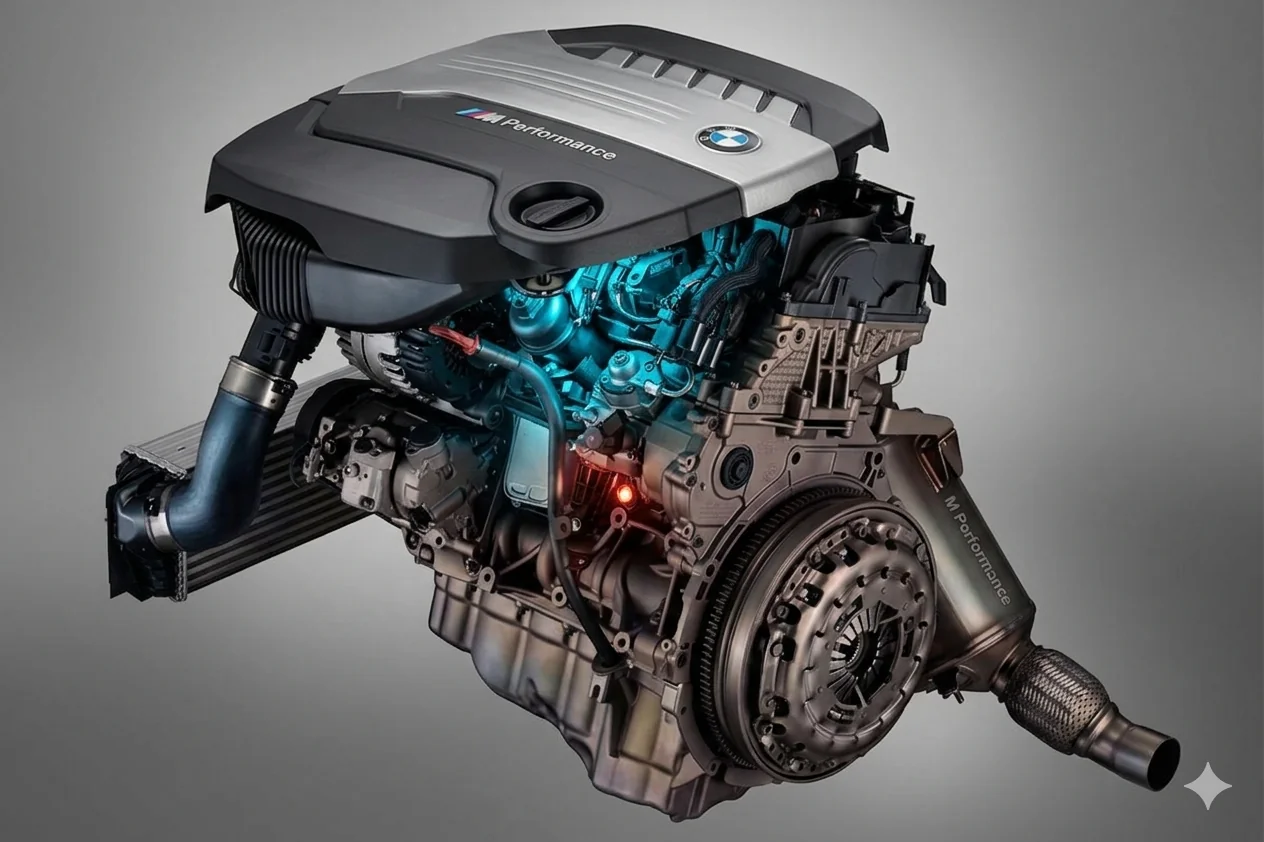
The BMW N47 is a 2.0-litre four-cylinder turbocharged diesel engine used across the BMW 1 Series, 3 Series, 5 Series, X1, X3, and several Mini variants. It was produced from 2007 to approximately 2015, when it was replaced by the B47.
Common N47-powered models include the 118d, 120d, 318d, 320d, 520d, and X1 18d/20d. Depending on the variant, stock outputs range from 115 bhp up to 204 bhp, with torque figures between 260 Nm and 400 Nm from the factory.
| Variant | Stock Power | Stock Torque |
|---|---|---|
| 116d / 316d | 115 bhp | 260 Nm |
| 118d / 318d | 143 bhp | 300 Nm |
| 120d / 320d / 520d | 177 bhp | 350 Nm |
| 123d / 325d (twin turbo) | 204 bhp | 400 Nm |
What Gets Adjusted in an N47 Remap
A Stage 1 N47 remap works entirely within the existing ECU software — no hardware changes are needed. The key parameters we adjust are:
Boost Pressure
The N47's variable geometry turbocharger (VGT) is managed by the ECU, which controls boost targets across the RPM range. From the factory, BMW sets conservative boost limits to ensure long service intervals, wide fuel quality tolerance, and uniform reliability across all markets. A properly calibrated Stage 1 map raises boost targets in the mid-range, where the turbo has headroom to deliver without thermal stress.
Fuelling and Rail Pressure
The N47 uses a high-pressure common rail injection system. Fuel rail pressure and injection quantity are adjusted alongside boost to maintain correct air-fuel ratios across the new output range. Fuelling is not simply increased — it is recalibrated proportionally to the revised boost and airflow targets.
Torque Limiters
BMW applies software torque limits in the ECU that cap output below what the hardware can physically deliver. On the 318d and 320d for example, the ECU limits torque to protect the standard drivetrain and ensure consistent behaviour across different trim levels. These limits are raised to appropriate levels in the remap — not removed, but recalibrated to match the new fuelling and boost profile.
Throttle and Pedal Response Maps
Factory throttle mapping on most N47 variants is intentionally dulled in the lower pedal range, partly for emissions and partly for comfort. We recalibrate throttle response to feel more direct, which improves how the car reacts at part throttle in town driving and on motorway overtakes.
N47 Stage 1 Power and Torque by Variant
Stage 1 is suitable for a completely standard vehicle — standard intake, standard exhaust, standard intercooler. The gains below are typical for a healthy engine in good condition.
| Variant | Stage 1 Power | Stage 1 Torque | Gain |
|---|---|---|---|
| 116d / 316d (115 bhp) | ~145 bhp | ~320 Nm | +30 bhp / +60 Nm |
| 118d / 318d (143 bhp) | ~180 bhp | ~375 Nm | +37 bhp / +75 Nm |
| 120d / 320d / 520d (177 bhp) | ~215 bhp | ~430 Nm | +38 bhp / +80 Nm |
These figures are representative of what a correctly calibrated Stage 1 delivers on a healthy N47 with standard hardware. Results vary with engine condition, fuel quality, ambient temperature, and vehicle history.
Gearbox Torque Limits on the N47
Many N47-powered BMWs use the GM6 6-speed manual or the ZF 6HP automatic gearbox. Both have software torque limits that interact with engine output. On automatics, the gearbox TCU communicates with the engine ECU via the CAN bus to manage torque delivery during gearchanges.
When remapping an N47 with an automatic gearbox, we check whether the TCU torque limit needs to be adjusted alongside the engine map. Running an engine map significantly above the gearbox's accepted torque threshold can cause hesitation, delayed shifts, or in some cases protective behaviour from the transmission. This is particularly relevant on ZF 6HP units used in the 320d and 520d Touring.
What to Check Before Remapping an N47
A remap increases the demands placed on the engine. Any pre-existing issues become more pronounced after tuning. Before we carry out any N47 remap, we recommend checking the following:
- Timing chain condition — early N47 engines (approximately 2007 to 2010) are known for timing chain and tensioner wear. This is a well-documented issue on the N47. We will not tune an N47 with timing chain symptoms as the increased load worsens the risk. If chain noise or rattle is present on cold start, the chain must be addressed first.
- Turbo health — check for shaft play and inspect for oil weeping around the turbo housing. A tired turbo will not hold the new boost targets consistently.
- EGR condition — heavy carbon buildup in the intake manifold or a sticking EGR valve can cause inconsistent fuelling. Diagnostics first, remap second.
- Fault codes — we run a full diagnostic scan before every remap. Any active faults are investigated before tuning proceeds.
- Service history — fresh oil and a clean fuel system help the engine respond better and maintain the remapped outputs long term.
According to BMW Group technical documentation, N47 engines built between 2007 and 2009 in particular show higher incidence of timing chain tensioner failure. This is a known mechanical issue that predates tuning and must be assessed independently of any software work.
What the Customer Feels After an N47 Remap
The most noticeable change on the N47 after a Stage 1 remap is in the mid-range — roughly 1,500 to 3,000 rpm. This is where diesel torque delivery is strongest, and where the factory calibration is most conservative. After the remap, the engine pulls more decisively from low speeds, overtakes on the motorway require less planning, and the throttle responds more directly to pedal input.
Fuel economy at steady motorway speeds often improves because the engine achieves the same output at lower throttle opening. In town driving, fuel economy depends heavily on driving style — if you use the extra torque, you will use more fuel.
Conclusion
The BMW N47 2.0 diesel responds well to a correctly calibrated Stage 1 remap. The key adjustments are boost pressure, fuelling, torque limiters, and throttle response — all within the ECU software, with no hardware changes required on a standard car.
Pre-tune diagnostics matter more on the N47 than most engines because of its known timing chain history. A thorough health check is not optional — it is part of the job.
Sources
- AA — Euro Emissions Standards — emissions framework that defines the conservative factory ECU calibration targets on Euro 5 and Euro 6 diesel engines including the N47
- RAC — Euro 6 Emissions Standards — covers NOx and particulate targets that influence factory boost and fuelling strategies on modern diesel engines
- UK Government — The MOT Test — official MOT requirements relevant to emissions testing on remapped diesel vehicles
BSG Automotive tunes the BMW N47 across West and North London. If you own a 1 Series, 3 Series, 5 Series, X1, or X3 with the N47 2.0 diesel, we carry out a full diagnostic check before every remap — no shortcuts.
See full details on our ECU Remapping Service page, or contact us to discuss your vehicle.