BSG Automotive remaps the BMW N57 3.0 diesel across West and North London — mobile service, diagnostics included.
The N57 is a step above the four-cylinder N47 in almost every regard. It has more displacement, a twin-turbo layout, and significantly more headroom for calibration. When remapped correctly, the N57 delivers a completely different character — stronger mid-range torque, better high-speed refinement, and a throttle response that suits the cars it powers.
What Is the BMW N57 Engine?
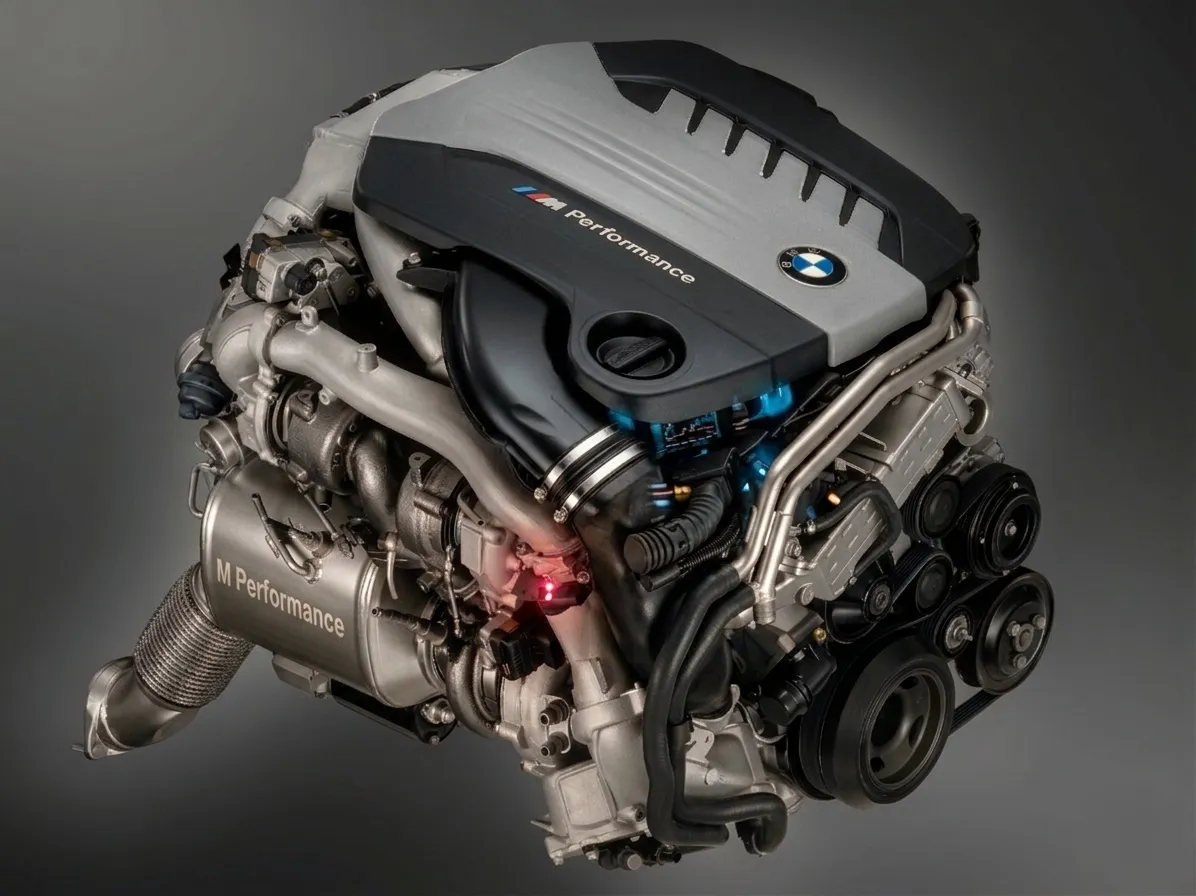
The BMW N57 is a 3.0-litre straight-six turbocharged diesel engine produced from 2008 onwards. It replaced the M57 unit and was fitted across a wide range of BMW models including the 5 Series, 7 Series, X5, X6, and 3 Series GT.
Unlike the four-cylinder N47, the N57 uses a twin-turbo layout — a smaller turbo for low-end response and a larger turbo for mid and high-range output. This arrangement gives the N57 a flatter, more linear torque curve compared to the N47.
| Variant | Models | Stock Power | Stock Torque |
|---|---|---|---|
| N57D30O0 (single turbo) | 525d, 325d | 197 bhp | 450 Nm |
| N57D30A (twin turbo) | 530d, 730d, X5 30d | 258 bhp | 540 Nm |
| N57D30T0 (twin turbo, higher output) | 535d, 735d, X6 35d | 313 bhp | 630 Nm |
How the N57 Twin-Turbo System Works
The N57's sequential twin-turbo system uses a small turbocharger at low engine speeds to build boost quickly, reducing turbo lag. As engine speed and load increase, the larger turbocharger takes over. The ECU manages this transition through variable geometry control and bypass valves.
This sequential architecture is more complex to calibrate than a single-turbo setup. Boost targets must be set correctly across both turbos' operating ranges — particularly around the handover point where the small turbo transitions to the large one. A poorly calibrated file at this transition creates a dip in torque delivery that the driver will feel as hesitation or flat spot.
What Changes in an N57 Remap
Boost Management Across Both Turbos
The key challenge on the N57 is calibrating boost targets that work cleanly across the entire RPM range, not just the peak. On the 530d for example, factory boost strategy is conservative in the 1,500–2,500 rpm range where most real-world driving occurs. A well-calibrated Stage 1 map raises targets here without overworking the small turbo in low-speed conditions.
Torque Limiter Adjustment
Like the N47, the N57 ECU contains multiple torque limits — for the engine itself, for the drivetrain, and to protect transmission components. All three need calibrating together. On the 530d and X5 30d, the factory engine torque limit sits noticeably below what the hardware can deliver, which is one reason the 530d responds so well to Stage 1 calibration.
Fuelling and Injection Timing
Rail pressure and injection quantity are adjusted alongside the revised boost profile. On the N57, injection timing is also recalibrated to account for the changed combustion conditions at the new output levels — this affects both efficiency and emissions behaviour under load.
Throttle and Pedal Mapping
The N57's factory throttle mapping is smooth but deliberately muted. Recalibrating pedal response makes low-speed driving feel more responsive and removes the slight delay between input and engine reaction that many N57 owners find frustrating.
N57 Stage 1 Output by Variant
These figures are representative for a standard, healthy N57 with stock hardware.
| Variant | Stage 1 Power | Stage 1 Torque | Gain |
|---|---|---|---|
| 525d / 325d (197 bhp) | ~245 bhp | ~540 Nm | +48 bhp / +90 Nm |
| 530d / 730d / X5 30d (258 bhp) | ~310 bhp | ~630 Nm | +52 bhp / +90 Nm |
| 535d / X6 35d (313 bhp) | ~365 bhp | ~730 Nm | +52 bhp / +100 Nm |
ZF 8-Speed Gearbox and Torque Management
Most N57-powered models use the ZF 8HP automatic gearbox. This is a strong unit, but it communicates torque requests and limits with the engine ECU continuously via CAN bus. When engine output increases significantly through a remap, the gearbox TCU may receive torque signals it was not calibrated to accept, which can cause hesitant gear selection or protective behaviour under hard acceleration.
On N57 remaps where the output increase is significant — particularly on the 530d and 535d — we check whether the ZF 8HP TCU torque acceptance threshold needs adjusting alongside the engine map. Running these two in isolation can create a mismatch that the driver notices as an uneven power delivery through gearchanges.
N57 vs N47 — Why the Six Responds Differently
Both engines respond well to Stage 1 calibration, but the N57 has more scope for gains because BMW applies tighter factory limits relative to its hardware capability. The six-cylinder's larger displacement and twin-turbo architecture mean more airflow is available, and the factory torque limits are set conservatively to keep the 530d below the 535d in the model hierarchy rather than for any genuine hardware constraint.
In practice, this means a remapped 530d feels substantially closer to the 535d than the factory outputs suggest — the hardware is capable, only the software separates them.
Conclusion
The BMW N57 3.0 diesel is one of the best diesel engines to remap in the current BMW range. Its twin-turbo architecture, large displacement, and artificially restricted factory outputs give it significant headroom for Stage 1 calibration. The key is managing boost transition between the two turbos cleanly, adjusting torque limiters across the drivetrain, and ensuring the ZF 8-speed gearbox is calibrated in step with the engine map.
Sources
- RAC — Euro 6 Emissions Standards — covers the emissions targets that influence factory boost and torque calibration strategy on Euro 6 diesel engines including the N57
- AA — Euro Emissions Standards — explains the Euro standards framework relevant to diesel engine ECU management
- UK Government — The MOT Test — official emissions testing requirements applicable to remapped diesel vehicles in the UK
BSG Automotive tunes the BMW N57 across West and North London, covering 5 Series, 7 Series, X5, X6, and 3 Series GT models. We carry out full diagnostics before every remap and assess gearbox torque calibration on all automatic N57 applications.
See our ECU Remapping Service for full details, or contact us to discuss your N57 vehicle.