
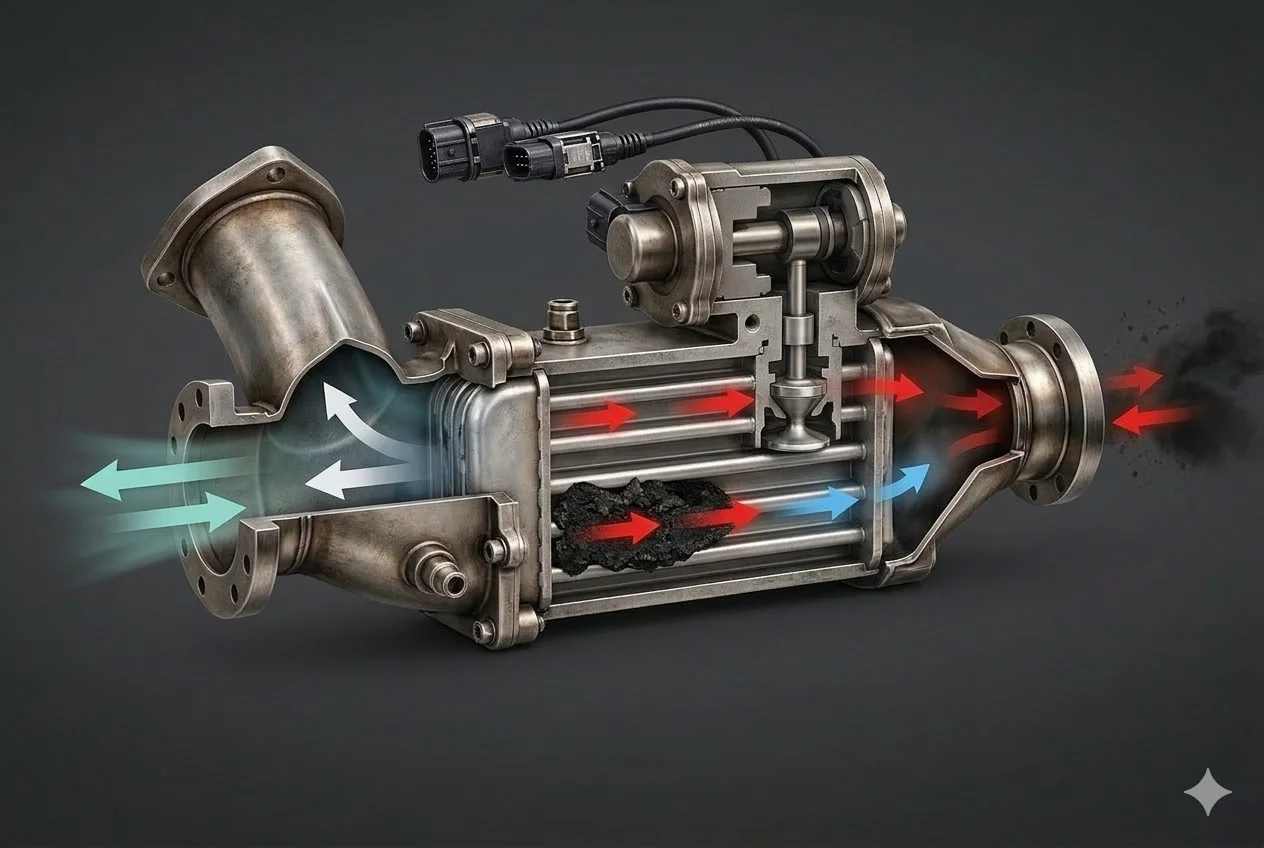
An EGR delete refers to disabling the Exhaust Gas Recirculation (EGR) system on a diesel vehicle by modifying the engine control unit (ECU) software and blanking or bypassing the EGR valve. The EGR system recirculates a portion of exhaust gases back into the engine's intake to lower combustion temperatures and reduce nitrogen oxide (NOx) emissions. An EGR delete stops this process and recalibrates the ECU so the engine no longer expects or monitors the EGR system.
How the EGR System Works
The EGR system works by diverting a controlled amount of exhaust gas from the exhaust manifold into the intake air stream. This inert gas lowers peak combustion temperatures, which reduces the formation of NOx — a major pollutant targeted by emissions standards.
Key parts of the EGR system include:
- EGR valve and cooler (fitted on most modern diesels)
- Pipework connecting the exhaust manifold to the intake
- Sensors to monitor EGR flow and temperature
- ECU logic to regulate the rate of exhaust gas recirculation
On modern engines, the ECU constantly monitors EGR operation and triggers fault codes, limp mode, or reduced power if expected EGR activity is not detected.
Why Diesel Owners Consider EGR Delete
EGR systems are prone to soot buildup and mechanical failures due to constant exposure to exhaust particulates. Over time this can lead to:
- Carbon-clogged intake manifolds and EGR coolers
- Sticking or seized EGR valves
- Limp mode activation and persistent warning lights
- Frequent maintenance visits or expensive component replacements
Owners dealing with repeated EGR faults or high-mileage engines often look at a delete as a way to avoid these issues and reduce vehicle downtime.
Advantages of EGR Delete
Reduced Carbon Buildup
With no exhaust gas recirculated into the intake, soot buildup in the intake manifold, valves, and turbo can be significantly reduced — leading to cleaner airflow and easier long-term maintenance.
Improved Throttle Response and Performance
Removing the inert exhaust gas from the intake charge can make the engine feel sharper, with more consistent throttle response and sometimes modest gains in torque and horsepower when paired with correct ECU calibration.
Fewer Failure Points
Without the EGR valve, cooler, sensors, and associated plumbing, there are fewer parts to fail or clog, which can improve overall reliability — particularly on high-mileage or heavily used diesel vehicles.
Potential Fuel Efficiency Gains
Some engines see small improvements in fuel economy because combustion is cleaner and more efficient without exhaust gases diluting the intake charge. Results vary depending on the engine type, condition, and driving style.
Lower Maintenance Costs
Owners can avoid repeated EGR cleanings and costly valve or cooler replacements that are among the most common failure points on many diesel engines.
Is EGR Delete Harmful to the Engine?
When performed correctly, an EGR delete does not directly damage the core engine because it primarily affects emissions control rather than combustion hardware. However, higher combustion temperatures and altered exhaust gas dynamics can increase stress on internal components if the ECU software is not correctly recalibrated.
Most issues arise from poor-quality deletes or incomplete ECU recalibration, not from the concept itself. A professionally carried out delete paired with correct model-specific tuning minimises risks and ensures stable engine operation.
Conclusion
An EGR delete is a diesel modification that removes the exhaust gas recirculation system and reprograms the ECU to stop monitoring EGR-related emissions functions. It can reduce carbon buildup, improve throttle response, and lower maintenance costs on vehicles plagued by EGR failures.
The key to safe implementation lies in proper diagnostics, correct ECU recalibration, and understanding where and how the vehicle will be used.
If your diesel vehicle has EGR warning lights, limp mode, carbon buildup issues, or recurring EGR fault codes, we can help with professional ECU diagnostics and software assessment.
We specialise in ECU software solutions and model-specific calibration work, including fault analysis, live data checks, and identifying the real cause of EGR-related problems before any programming is carried out.
Contact us to book a diagnostic inspection and discuss the right ECU software solution for your vehicle and application. You can also see full details on our EGR Delete Service page.