
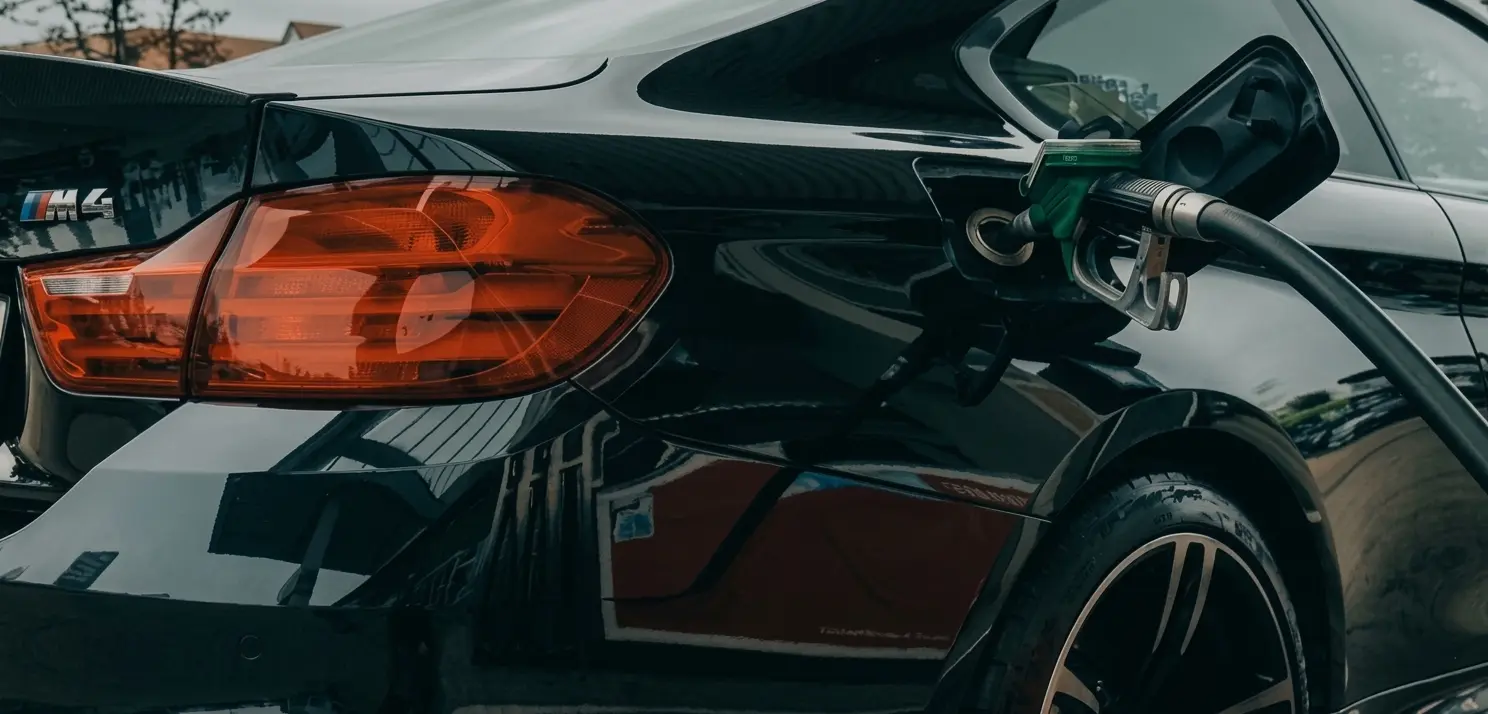
If you have filled up recently, you already know: fuel prices in the UK are back to levels that hurt. Petrol is sitting at 155p per litre, diesel at 190p, and at motorway service stations you are paying considerably more on top of that. The culprit, as usual, is a combination of geopolitical instability, specifically the ongoing conflict in the Middle East and disruptions to oil shipping through the Strait of Hormuz, plus a weakening pound and stubborn retail margins that refuse to fall as quickly as wholesale prices do.
The honest reality is that UK drivers have very little control over what happens at the Strait of Hormuz. What you do have control over is how efficiently you use the fuel you buy. This guide pulls together the most effective, evidence-backed ways to reduce your fuel consumption — from how you drive to how you look after your car, and what myths to ignore. We have also included a section on the one technical upgrade that can meaningfully improve real-world fuel economy: an ECU remap.
Why Fuel Prices Are High Right Now
The UK pump price is made up of several layers: the wholesale cost of crude oil, fuel duty (currently 52.95p per litre), VAT at 20%, retailer margins, and delivery costs. Even when crude oil prices ease, pump prices tend to fall slowly because retailers purchased fuel in advance at higher prices.
Right now, with Brent crude fluctuating sharply due to Middle East tensions and supply route disruption, there is no immediate relief in sight. Diesel has been hit hardest — up more than 34p per litre since late February 2026. At 190p per litre, a typical 55-litre tank of diesel now costs over £104. That is why fuel economy has never been more important.
How You Drive: The Biggest Factor
No fuel saving tip matters more than how you use the throttle and brakes. Conservative estimates suggest driving style alone accounts for 20–30% of real-world fuel consumption variation between drivers in identical cars.
Smooth acceleration, always. Every time you press the accelerator hard, fuel consumption spikes dramatically. A trip computer watching an aggressive driver will show consumption figures of under 5 mpg during hard acceleration bursts. A smooth driver in the same traffic will see 15–23 mpg. That is not a small difference.
Anticipate the road ahead. Read traffic lights, junctions, and roundabouts early. Lifting off the throttle and coasting towards a red light instead of braking hard at it keeps kinetic energy working for you. On a modern fuel-injected car, coasting in gear uses zero fuel. On neutral, the engine burns fuel to maintain idle speed. Keep it in gear.
Stay in the correct rev range. For most petrol engines, the efficient range is 1,500–2,500 rpm. Diesel engines are often most efficient between 1,200–2,000 rpm. If you are on a manual, shift up early and shift down late. Let the engine work at its most efficient torque output rather than screaming at high revs.
Use cruise control on the motorway. Most drivers unconsciously vary their speed by 2–5 mph constantly. Cruise control eliminates this and maintains optimal fuel consumption. On a 300-mile run, it can save 5–10% in fuel.
Speed and fuel economy. Air drag increases with the square of speed. The difference between cruising at 70 mph and 80 mph is typically 10–15% more fuel consumption. Dropping from 80 mph to 70 mph on a 300-mile motorway run saves real money. The sweet spot for most petrol and diesel cars is 56–65 mph.
Before You Set Off: Preparation That Saves Money
Check tyre pressures. Under-inflated tyres by 10 psi increase fuel consumption by 2–3%. Check them cold, against the figure shown on your door jamb or fuel cap, not at the forecourt where tyres are already warm. Do this at minimum twice a month.
Remove unnecessary weight. Every extra 100 kg in the car reduces fuel economy by roughly 1–2 mpg in real-world driving. Empty the boot. Remove roof boxes and roof bars when not in use — even an empty roof rack increases aerodynamic drag and costs you at the pump.
Service your car on time. A clogged air filter, worn spark plugs, and old oil all hurt fuel economy. A dirty air filter reduces airflow to the engine, forcing it to compensate. Regular servicing keeps the engine operating at the efficiency it was designed for. A properly serviced car can use 5–10% less fuel than a neglected one.
Fill up at supermarkets, not motorway stations. Supermarket forecourts are typically 3–5p per litre cheaper than branded independents, and often 15–20p per litre cheaper than motorway services.
Plan your route. Sitting in traffic burns fuel at idle for zero progress. Check traffic before departure using Waze, Google Maps or the Highways England Traffic England website. Five minutes of route research can save you 20–30 minutes and meaningful fuel.
Maintaining Your Car for Maximum Efficiency
Change filters regularly. Air filters and fuel filters directly affect how efficiently the engine burns fuel. Do not skip them to save money at the service — the fuel cost of a clogged filter will exceed the price of the filter itself.
Use the right engine oil. Check your handbook for the manufacturer-specified viscosity. Using a heavier oil than specified increases internal friction and fuel consumption. Modern low-viscosity oils (0W-20, 5W-30) are specified for a reason.
Keep your tyres in good condition. Correct pressure is not the only factor. Tyres with high rolling resistance cost more fuel. When replacing tyres, pay attention to the EU tyre label rolling resistance rating — tyres rated A or B can save around 1–2 mpg compared to lower-rated alternatives.
Check your brakes are not dragging. A sticking brake calliper or handbrake cable causes constant resistance, forcing the engine to work harder on every journey. If a wheel is warm to the touch after a short drive, get it checked.
Aerodynamics and Load
Aerodynamic drag is a significant fuel cost, especially at motorway speeds. Even modifications that look sporty can actively hurt fuel economy.
Remove roof bars and roof boxes when not in use. Even an empty roof rack creates drag. Wider-than-standard aftermarket wheels increase rolling resistance. Spoilers and body kits designed for aesthetics rather than aerodynamics add drag rather than reducing it. At motorway speeds, these additions cost real money in fuel every time you drive.
Keep your windows closed above 55 mph. The aerodynamic penalty of open windows at motorway speeds outweighs the fuel cost of air conditioning. Below 50 mph in town, opening windows is fine.
The ECU Remap: The Long-Term Fuel Economy Upgrade
Every tip in this article helps at the margins. If you want a meaningful, permanent improvement in fuel economy alongside better performance, an ECU remap is worth serious consideration.
Modern engines are calibrated by manufacturers for global markets — accounting for varying fuel quality, different emissions regulations, and conservative warranty buffers. The result is an engine that is rarely running at its optimal efficiency for UK fuel and UK roads.
A Stage 1 ECU remap from BSG Automotive recalibrates your fuel maps, ignition timing, and boost pressure (on turbocharged engines) to bring the engine closer to its true optimal operating parameters. The outcome is more torque in the mid-range, which means the engine does less work to maintain speed — and that translates directly into better fuel economy on real roads.
Many of our customers report 5–10% improvements in fuel economy on motorway driving following a remap, because the engine spends more time in its most efficient torque band rather than working harder than it needs to. Combined with better throttle response and additional power on demand, the remap pays for itself over time, especially if you cover high mileages.
If you drive a diesel van for work, the fuel savings from a remap can be particularly significant. Read our article on Stage 1 remapping for diesel vans for a detailed breakdown.
Fuel Myths Worth Ignoring
There is a lot of bad advice circulating about how to save fuel. Some of it is harmless but useless. Some of it actively causes harm or increases costs. Here are the most common ones:
Myth: Coasting in neutral saves fuel.
The opposite is true. On a modern fuel-injected car, coasting in gear with your foot off the throttle cuts fuel delivery to zero — the car coasts on engine braking alone. Switch to neutral, and the engine immediately needs fuel to maintain idle speed. Stay in gear.
Myth: Open windows are better than air conditioning at motorway speed.
Not above 55 mph. Open windows at motorway speeds increase aerodynamic drag enough to cost more fuel than the air conditioning system uses. Use AC on the motorway, open windows in slow city traffic.
Myth: Premium fuel (higher octane) saves fuel in a standard engine.
Only if your engine is specifically calibrated to benefit from higher octane fuel. In most standard petrol engines not designed for it, premium fuel does not improve economy.
Myth: Fuel additives and economy devices significantly reduce consumption.
The vast majority of aftermarket fuel additives, magnets, and economy devices do not produce meaningful real-world savings. If the saving is real, it is typically so small it does not offset the cost of the product. Keep your money.
Myth: Drafting behind lorries saves significant fuel.
In theory, following a lorry reduces your aerodynamic drag. In practice, the following distance required for any meaningful effect puts you dangerously close to a vehicle you cannot see past. The repair bill from a single incident will erase any fuel saving many times over.
Myth: Warming up the engine at idle before driving saves fuel.
Modern engines do not need prolonged warm-up idling. Thirty seconds to allow oil to circulate is sufficient. Sitting idling for five minutes wastes fuel and puts cold engine components under unnecessary stress. Drive gently for the first few minutes instead.
Summary: What Actually Moves the Needle
To close, here is a ranked order of fuel-saving impact, from highest to lowest:
- Driving style — smooth acceleration and anticipation. The single biggest variable.
- Speed management — staying closer to 60–65 mph on the motorway rather than 75–80 mph.
- Tyre pressures — easy to check, easy to neglect, directly costs you money.
- Regular servicing — filters, oil, plugs all affect combustion efficiency.
- Removing unnecessary weight and aerodynamic drag — roof bars, roof boxes, heavy boot clutter.
- Smart fuelling — filling up at supermarkets, using price comparison apps.
- ECU remap — the one upgrade that improves both fuel economy and performance permanently.
Fuel prices will continue to be driven by events largely outside any driver's control. What you can control is how efficiently your car uses every litre you put into it.
Frequently Asked Questions
For most petrol and diesel cars, 56–65 mph is the sweet spot. Every 5 mph above 60 mph adds approximately 2–3% to fuel consumption. Reducing from 80 mph to 70 mph typically cuts fuel use by 10%, with a negligible increase in journey time on longer runs.
Yes, consistently. Most drivers unconsciously vary their speed by several mph, causing micro-accelerations that add up. Cruise control eliminates this and maintains a steady, efficient speed. On a 300-mile motorway journey, you can typically save 5–10% on fuel compared to manual throttle control.
For many turbocharged petrol and diesel engines, yes. A Stage 1 remap optimises fuel maps and ignition timing for real-world conditions, allowing the engine to produce its torque more efficiently. BSG Automotive customers frequently report 5–10% fuel economy improvements on motorway runs after a remap. Contact us to discuss what is achievable for your specific vehicle.
Only if your manufacturer specifies it. Most standard engines are not calibrated to extract additional economy from higher-octane fuel. If your handbook recommends 95 RON, buying 99 RON will not save fuel and will cost more per litre.
The Petrol Prices app and Confused.com fuel finder both show real-time forecourt prices by location. Supermarket forecourts are typically 3–5p per litre cheaper than branded independents. Avoid motorway service stations unless you have no other option — they often charge 15–20p per litre above local forecourt prices.
BSG Automotive offers mobile ECU remapping and diagnostics across North and West London. To discuss a Stage 1 remap for your vehicle, contact us here.