
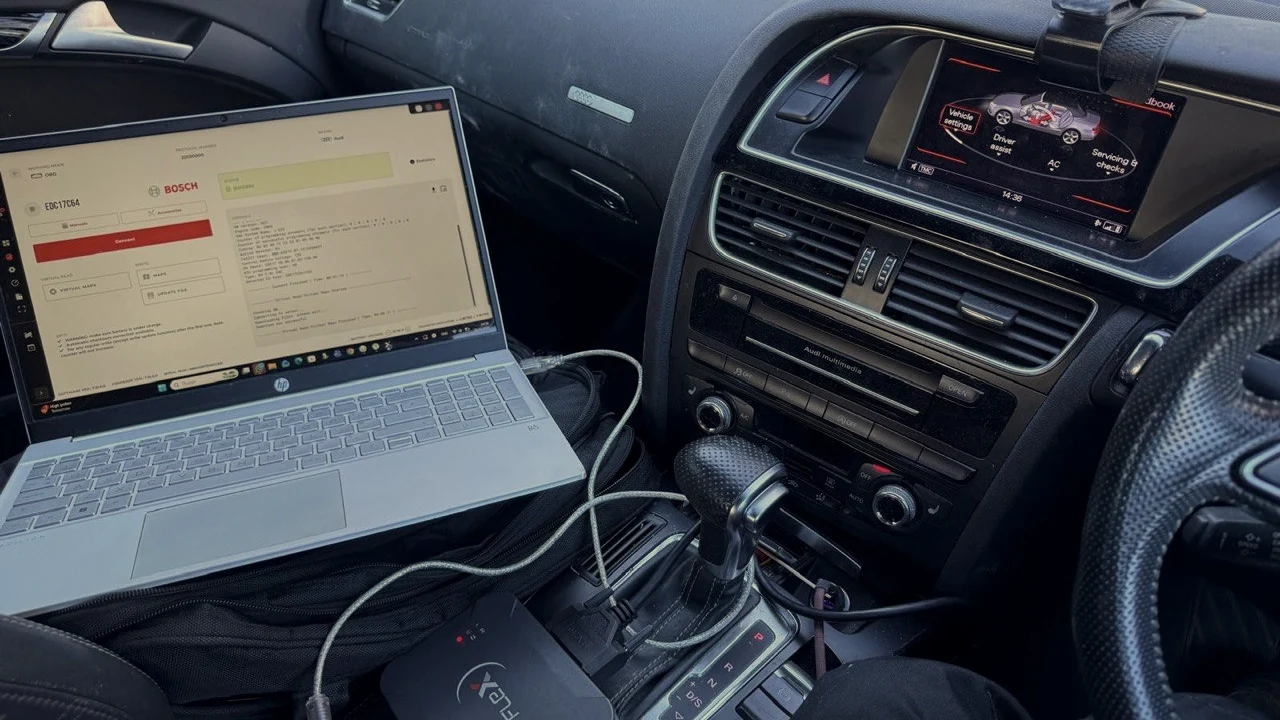
Yes, a high-mileage car can be a candidate for remapping, but the odometer cannot tell you whether yours is suitable. The decision depends on its maintenance, current condition, engine and gearbox specification, and the extra performance being requested. A car that runs smoothly may still have faults or wear worth investigating before adding torque.
Start by establishing how the car performs on its existing software. Check its history, investigate symptoms and assess the engine and drivetrain. Those checks help inform the decision; they cannot guarantee how long used components will last.
Is there a mileage limit for remapping?
There is no single mileage figure that establishes whether every car can be remapped. Reaching 100,000 miles does not automatically rule tuning out, and being below that figure does not establish that a vehicle is ready.
At 150,000 or 200,000 miles, the useful questions remain specific: what has been maintained, what has been replaced, what symptoms are present, and what does the assessment show? Mileage is relevant context, rather than a substitute for those answers.
Journey patterns matter too. Ask about repeated short trips, towing, prolonged heavy use and previous overheating, alongside the service record. A history described as “mostly motorway miles” is useful background, but it is not proof of mechanical condition.
A replacement turbo or clutch also needs context. Find out why it failed, whether the cause was addressed and what else remains original. One new component does not establish the condition of the rest of the car.
What does a remap ask of an older engine and drivetrain?
An ECU remap changes engine-control settings. Depending on the engine and calibration, those changes can include torque requests, boost control, fuelling and ignition timing. When you use the additional performance, components may experience greater mechanical and thermal demands.
The shape of the torque delivery matters alongside peak power. A large increase at low engine speeds can be a particular concern when assessing the clutch, flywheel and gearbox. Two calibrations advertised with the same peak power need not deliver torque in the same way.
If a problem appears after tuning, it should be investigated. Existing wear, an unsuitable calibration, installation issues or another fault may be involved; the timing alone does not establish the cause.
A remap cannot repair wear, cure a boost leak or make a failing cooling system healthy. If the car has lost performance, finding the reason comes first.
What should you check before remapping a high-mileage car?
Service history and timing components
Look beyond a stamped book. Invoices can establish which oil was used, when filters were changed and whether relevant maintenance was completed. Check the manufacturer's requirements for the exact engine and vehicle, including time-based work.
Timing belts and chains need different consideration. Belt schedules vary by engine and market; a timing chain should not be assigned a universal replacement mileage. Investigate abnormal noises, relevant faults and any manufacturer guidance for the specific application.
Overdue maintenance needs attention before tuning. A fresh oil change is useful when due, but it does not erase previous neglect or establish the condition of bearings, cylinders or the turbo.
Oil consumption, leaks and cooling
Be ready to explain how often the car needs oil, whether that has changed and whether coolant requires topping up. Record quantities and distance where possible. Compare consumption with the correct manufacturer guidance rather than an arbitrary internet threshold.
Unexplained coolant loss, overheating, persistent smoke or rising oil consumption needs investigation. Smoke colour and an oily hose are clues, not a complete diagnosis. The cause may involve several systems.
Garrett's turbocharger diagnostic guidance calls for manufacturer procedures and warns against continuing trials when serious malfunction symptoms appear. Do not attempt repeated acceleration tests to see whether a suspect engine “clears itself”.
Fault codes and baseline operating data
A scan should cover the relevant systems, including the gearbox where appropriate. Save the findings and investigate relevant active, pending or recurring faults. Clearing a code does not resolve its cause.
No fault codes does not mean no mechanical wear. A scan cannot establish the remaining life of a clutch, turbo or engine. It needs to be considered alongside symptoms, physical inspection and suitable operating data.
Depending on the vehicle, useful data may include requested and actual boost, fuel pressure, temperatures and misfire information. Readings must be interpreted under appropriate conditions using application-specific information. Bosch describes professional diagnosis as including fault analysis, live values and component-test instructions, rather than code reading alone.
Turbo, intake and boost control
Check the intake and charge-air system for leaks, damaged hoses and loose connections. Unusual noises, inconsistent boost or excessive smoke deserve attention before requesting more performance.
A mismatch between requested and actual boost indicates a need for investigation; it does not identify the failed part by itself. Inspection and testing should follow the vehicle and turbo manufacturer's procedures. Avoid judging turbo condition solely by moving the shaft without the correct assessment method.
Our guide to how turbochargers work explains the basic system. For a particular car, its actual hardware and control arrangement matter more than a generic boost figure.
Fuelling and ignition: petrol and diesel checks differ
On a diesel, review relevant fuel-pressure behaviour, filter maintenance and any starting or running complaints. Injector correction values can guide further checks, but should not be treated as a complete injector health certificate.
On a petrol engine, investigate misfires and check relevant plug, coil and fuel-system concerns. Depending on the engine, fuel trims, ignition correction and pressure data may help. Agree the required fuel grade before tuning and use it consistently afterwards.
There is no universal set of acceptable readings for every engine. Diagnostic limits and test conditions need to match the vehicle.
Clutch, dual-mass flywheel and gearbox
Tell the tuner about clutch slip, shudder, rattles, delayed engagement or unusual gear changes. Symptoms need diagnosis because similar complaints can have different causes.
An already slipping clutch needs investigation before torque is increased. A milder calibration is not a repair. The same principle applies to an automatic gearbox that flares between changes or behaves abnormally.
Check transmission maintenance against the requirements for that exact gearbox. Do not assume all automatics share one service interval or torque capacity. A gearbox software change cannot restore worn friction material or repair a mechanical fault.
DPF, EGR and other emissions systems
On a diesel, repeated diesel particulate filter (DPF) warnings, frequent regeneration complaints or exhaust gas recirculation (EGR) faults should be investigated before tuning. Where fitted, selective catalytic reduction (SCR/AdBlue) faults also need proper assessment.
Look at the complete system and appropriate diagnostic information. A warning alone does not establish whether the problem is the filter, a sensor or another underlying fault.
Removing emissions equipment is not a maintenance shortcut for a UK road car. Government DPF guidance explains the road-use implications, while the MOT manual covers missing or obviously modified emissions equipment. Passing an MOT should not be treated as proof that every modification is lawful.
Engine-specific checks and further testing
Identify the actual engine variant and transmission before discussing targets or known concerns. A model badge alone may cover several configurations. Previous modifications and existing ECU software also need to be established as far as reasonably possible.
Compression, leak-down, oil-pressure or other specialist tests can be appropriate when symptoms or initial findings justify them. High mileage alone does not mean every car needs every test. Equally, a basic scan should not end the investigation when there is a reason to suspect a mechanical problem.
When should you postpone or avoid a remap?
Use the assessment to decide what happens next. A warning light is one reason to pause, but significant symptoms deserve attention even when the dashboard is clear.
| Finding | Sensible next step |
|---|---|
| Relevant overdue maintenance or gaps in the history | Establish what is required and complete the necessary work |
| Recurring engine faults, limp mode or misfires | Diagnose, repair and reassess |
| Suspected boost leak or fuel-pressure problem | Test the affected system and verify the repair |
| Clutch slip or abnormal transmission behaviour | Investigate the drivetrain before increasing torque |
| Unexplained oil/coolant loss, overheating or persistent smoke | Establish the cause before considering tuning |
| No relevant concerns found in the assessment | Discuss suitable targets and the uncertainty that remains |
Some cars may be better left on standard software. That can be the sensible decision where condition remains uncertain, repairs are uneconomic or the owner cannot accommodate the risk of additional repair costs.
Would a conservative Stage 1 remap be suitable?
“Stage 1” usually describes tuning intended for standard hardware, but it is not a standardised safety certification. The label does not establish the quality of the calibration or the suitability of a particular vehicle.
A useful discussion starts with what you want to improve. Ask about the proposed torque delivery, fuel requirements, relevant engine and gearbox constraints, retained protections and how the result will be checked. Maximum advertised figures should not determine the plan for a used car.
Lower targets may reduce some demands compared with a more aggressive calibration, but they do not remove existing wear or make an unresolved fault acceptable. There is no universal percentage gain or torque figure that can be called safe for every high-mileage engine.
For a suitable vehicle, the aim may be a measured improvement in response and usable performance. That still requires an assessment of the individual car and a clear explanation of the limits.
Is remapping worth it on your particular car?
Consider the total decision: maintenance, any repairs, tuning, insurance and the possibility of future work. If the car is currently underperforming because of a fault, restoring normal operation may address the complaint before tuning is considered.
Think about how long you intend to keep it and how you use it. Frequent towing or sustained heavy loads should form part of the discussion. Do not build the financial case around promised fuel savings or an assumption that tuning will extend engine life.
Contact your insurer before proceeding, explain the proposed remap and obtain confirmation of acceptance and any policy changes. The Financial Ombudsman Service highlights cases involving undeclared modifications, including ECU remapping. Also check applicable warranty, finance or lease conditions; do not assume the outcome is the same under every agreement.
What should happen after the remap?
The result should be checked against the agreed targets and relevant baseline information. Depending on the vehicle and work, this may involve diagnostic checks, logging and appropriate road or dynamometer testing. Ask what validation is included before booking.
A dyno measures performance under its test conditions; it cannot certify the remaining life of used components. If power figures are supplied, establish whether they are measured at the wheels or stated as engine output.
Follow the agreed fuel requirement and maintain the car using the correct specifications. Investigate new warning lights, smoke, fluid loss, misfires or abnormal transmission behaviour promptly. Keep the tuning documentation with the service history.
Make the decision from the car's condition
A high-mileage car should be assessed on evidence: its maintenance record, current behaviour, inspection findings and appropriate test results. Mileage helps frame that assessment, but cannot replace it. Resolve relevant faults first, agree realistic targets and understand the remaining uncertainty. Where the findings do not support tuning, keeping the standard calibration is a reasonable outcome.
Frequently asked questions
Can you remap a car with more than 150,000 miles?
Potentially, but mileage alone cannot establish suitability. The engine, transmission, maintenance history, current condition and proposed calibration need assessment. There is no automatic approval at any mileage.
Does a clean diagnostic scan mean my car is ready?
No. It means the scan did not identify relevant recorded faults within its coverage. Physical wear and some developing problems may still require inspection or further testing.
Do I need a compression test before remapping?
Not solely because the mileage is high. Compression or other mechanical tests may be appropriate when symptoms, history or initial findings justify them. The test method and interpretation must suit the engine.
Can a remap damage an older clutch or automatic gearbox?
Additional torque can increase drivetrain demands. Existing wear, the calibration and how the car is used all matter. Any slip or abnormal gearbox behaviour needs investigation before tuning.
Does returning to the standard map reverse mechanical wear?
No. Restoring suitable standard software changes the calibration; it does not repair worn parts. It also does not automatically resolve insurance or warranty questions.
Considering a remap?
Send BSG Automotive your registration, engine and gearbox details, mileage, service history and what you want to improve. Include any symptoms or fault codes. We can discuss the checks needed before tuning and whether a Stage 1 remap is suitable for your car.