
What Is DPF Delete? (DPF Off ECU Software Explained)
DPF delete (also called DPF off) is a diesel ECU software modification that disables diesel particulate filter (DPF) monitoring and regeneration functions in the engine control unit. In most cases, it is paired with exhaust system changes so the vehicle can run without active DPF logic.
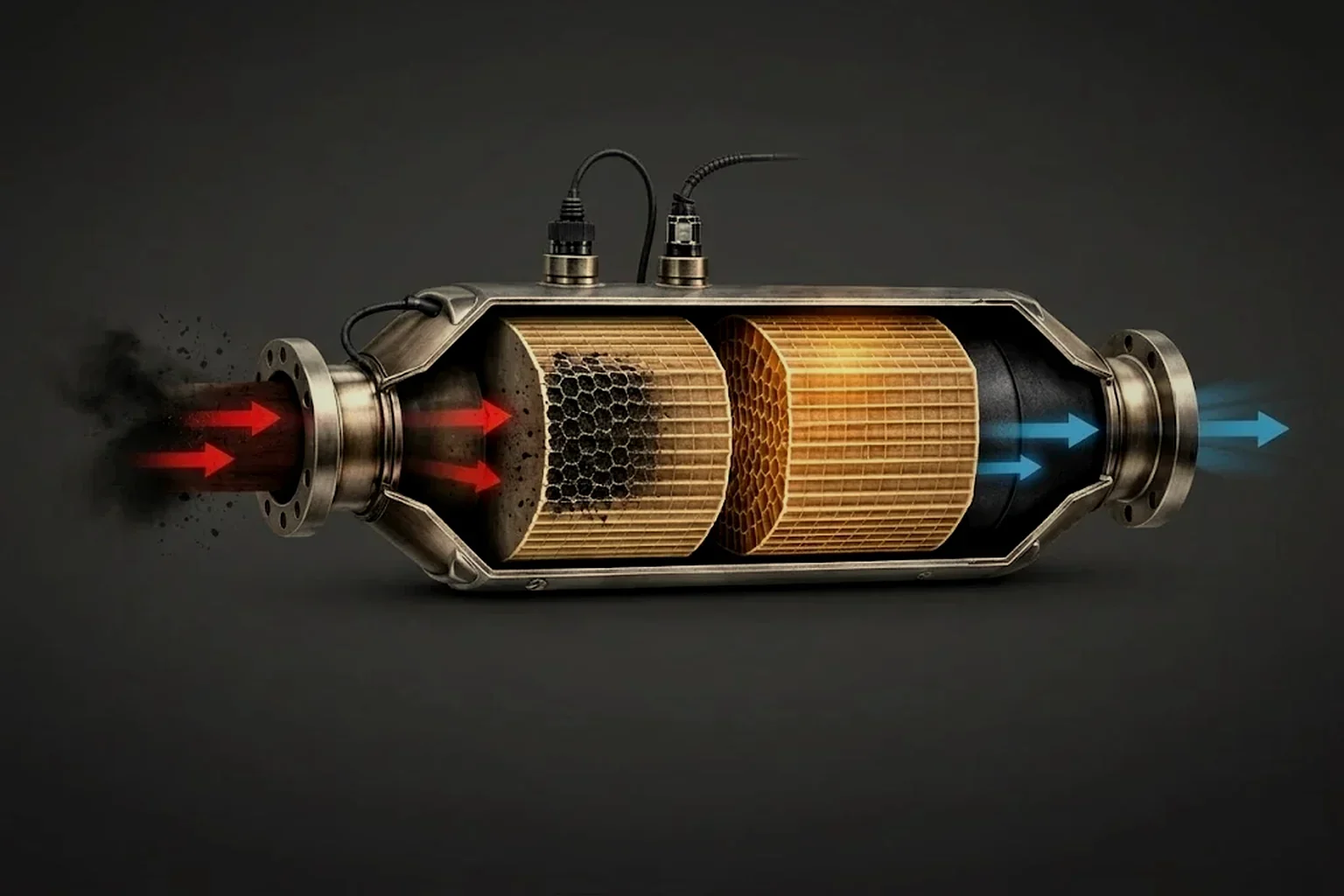
The DPF is designed to capture soot (particulate matter) from diesel exhaust and reduce emissions to meet standards such as Euro 5 and Euro 6. When the filter becomes loaded, the ECU controls regeneration to burn off the soot. If the DPF system develops faults, the ECU may trigger warning lights, reduce engine performance, increase fuel consumption, or put the vehicle into limp mode.
From a technical point of view, DPF delete is not only an exhaust modification. It is primarily an ECU software and diagnostics job, because DPF operation, regeneration, fault monitoring, and protection strategies are all controlled by ECU logic.
How Does a DPF Work?
The diesel particulate filter is fitted in the exhaust system and uses a honeycomb-style structure to trap microscopic soot particles produced during combustion.
As soot builds up, the vehicle performs regeneration. During regeneration, exhaust temperatures are raised so the soot burns off and the filter can continue working. Depending on the vehicle and driving conditions, regeneration may happen passively (during normal driving) or actively (through ECU-controlled fuel injection strategies).
A DPF system usually includes:
- The DPF unit itself
- Differential pressure sensors (to monitor restriction/load)
- Exhaust gas temperature sensors
- ECU regeneration control logic
When these components fail, drivers may experience warning lights, repeated regeneration attempts, reduced performance, limp mode, and sometimes higher fuel consumption.
Why Do Owners Consider a DPF Delete?
Some diesel owners consider DPF delete after repeated DPF-related faults or expensive repairs, especially on vehicles used mainly for short journeys.
Common reasons include:
- Performance and exhaust flow: Removing the DPF reduces exhaust restriction (backpressure). On some engines, this may improve throttle response and slightly change power delivery.
- Reduced maintenance costs: DPF cleaning, replacement filters, sensors, and diagnostics can be expensive. If DPF faults return repeatedly, costs can add up quickly.
- Fewer regeneration problems: Vehicles used for frequent short trips may struggle to complete regeneration cycles. This can lead to repeated warnings and ongoing drivability issues.
- Potential fuel economy changes: Because active regeneration uses extra fuel, some owners report small fuel economy improvements after deleting the system. Results vary depending on the engine, software quality, and driving style.
What Does a DPF Delete Involve?
A full DPF delete usually includes two parts:
Mechanical Modification
The DPF is removed from the exhaust system or replaced with a modified section to allow freer exhaust flow.
ECU Software Changes
From an ECU software perspective, DPF delete means recalibrating the engine management software so DPF-related functions are disabled or removed from normal operation.
This can include:
- Disabling DPF fault monitoring routines
- Disabling regeneration requests
- Adjusting torque limitation strategies linked to DPF faults
- Preventing DPF-related warning triggers (where supported by ECU logic)
- Removing limp-mode conditions caused specifically by DPF load or DPF fault states
The exact process depends on the ECU type, software version, and vehicle platform. There is no universal file that safely works for every diesel engine.
This is why proper DPF off work requires model-specific ECU knowledge and diagnostics, not generic file writing. Removing DPF hardware without correct ECU software changes will usually result in fault codes, warning lights, and poor operation.
Possible Benefits of DPF Delete
- Reduced DPF-related repair costs: There is no longer a DPF to clean, replace, or regenerate.
- Improved exhaust flow: Lower backpressure may improve throttle response on some diesel engines.
- No regeneration interruptions: The vehicle will no longer attempt DPF regeneration cycles.
- Potential fuel savings: Some vehicles may use slightly less fuel if active regeneration was previously frequent.
- Less heat load in the DPF section: Without regeneration events, heat stress in the DPF section is no longer a factor (although overall results still depend on engine condition and software quality).
Is DPF Delete Harmful to the Engine?
A properly calibrated DPF delete does not automatically damage engine internals. However, it changes how the vehicle's exhaust and emissions systems operate, so the outcome depends heavily on the quality of the work.
Most problems associated with DPF delete come from:
- Poor ECU software calibration
- Incomplete coding (faults not correctly disabled)
- Low-quality mechanical work
- Existing engine faults being masked rather than fixed
If the root cause of the DPF problem is something else (for example injector faults, turbo issues, EGR problems, thermostat faults, or sensor failures), deleting the DPF does not solve the underlying fault.
This is why correct diagnostics should always come before any ECU software work.
Conclusion
DPF delete is a diesel modification that removes or disables the particulate filter and recalibrates the ECU to operate without DPF functions. It may reduce DPF-related maintenance costs, improve exhaust flow, and eliminate regeneration issues, but it also increases emissions and carries legal, insurance, and resale risks.
For customers experiencing repeated DPF faults, the first step should always be proper diagnostics, not guesswork.
If your diesel vehicle has DPF warning lights, repeated regenerations, limp mode, or recurring DPF fault codes, we can help with professional ECU diagnostics and software assessment.
We specialise in ECU software solutions and model-specific calibration work, including fault analysis, live data checks, and identifying the real cause of DPF-related problems before any programming is carried out.
Contact us to book a diagnostic inspection and discuss the right ECU software solution for your vehicle and application. You can also see full details on our DPF Delete Service page.