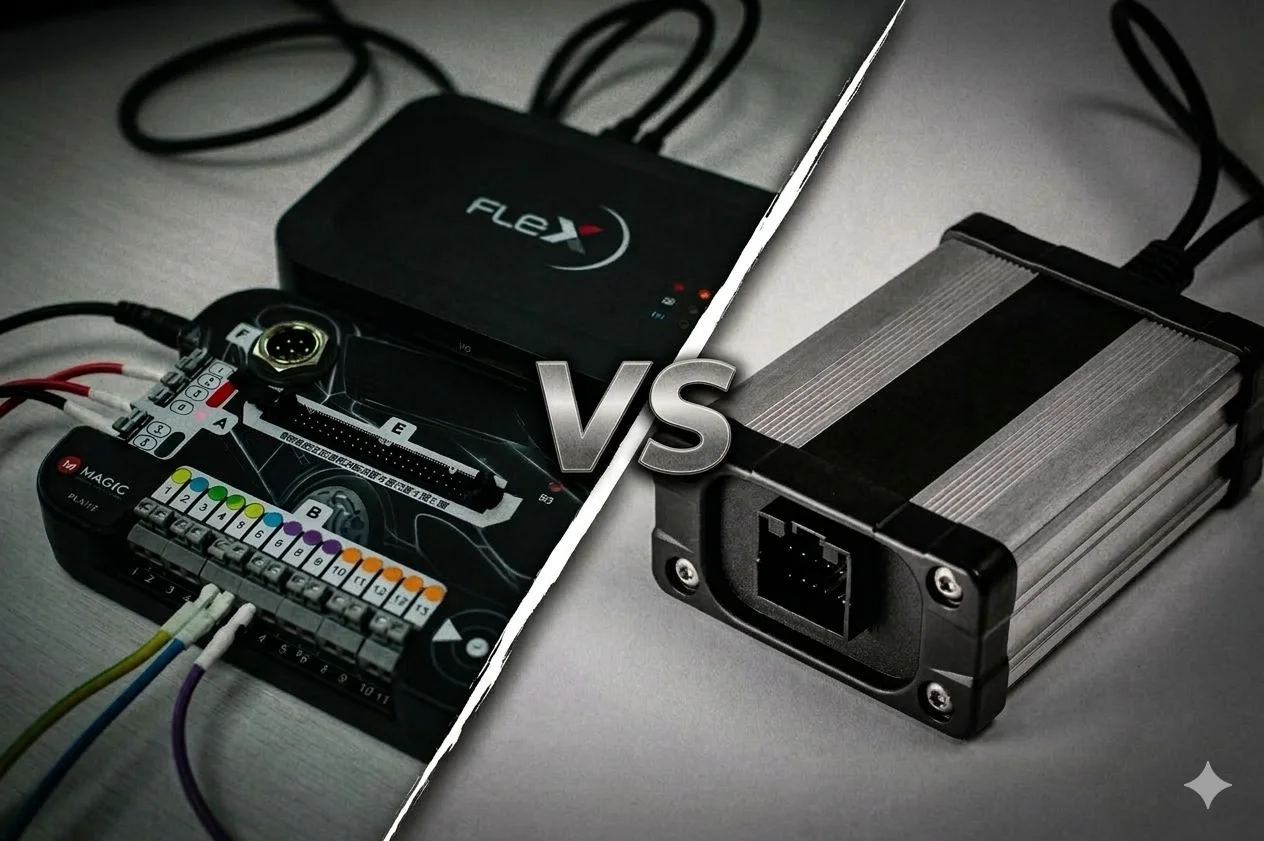
If you've ever looked into getting a bit more out of your engine, you've probably come across two options: a tuning box and an ECU remap.
They both promise more power, better throttle response, and improved fuel economy. But they work in completely different ways — and the results aren't even close.
Here's the honest breakdown.
What's a Tuning Box?
A tuning box is a small electronic device that plugs in between your engine's sensors and the ECU (the computer that controls how your engine runs). It intercepts the signals going to the ECU and modifies them — essentially tricking the ECU into thinking conditions are different from what they actually are.
For example, it might tell the ECU that the fuel rail pressure is lower than it really is, so the ECU compensates by injecting more fuel. More fuel plus more boost equals more power. In theory.
The appeal is obvious: it's plug-and-play, you can fit it yourself in most cases, and you can unplug it just as easily. Some people like that because it feels reversible and less invasive.
What's an ECU Remap?
An ECU remap (sometimes called chip tuning or flashing) is completely different. Instead of tricking the ECU, a remap changes the actual software inside it.
A trained technician reads the ECU's original calibration file, modifies the fuel maps, boost maps, ignition timing, torque limiters, and other parameters, and then writes the new file back to the ECU. Everything is adjusted together, as a package, so the engine runs with the new settings natively.
No extra hardware. No intercepted signals. The ECU itself is running optimised software designed for your specific engine.
So What's the Difference in Practice?
This is where it matters.
A tuning box only adjusts one or two parameters — usually fuel pressure and boost. Everything else stays on the factory map. That means the ECU is constantly trying to compensate for signals that don't match what the engine is actually doing. It's working against itself.
The result? You get some extra power, but it's often rough around the edges. Throttle response can feel inconsistent, the power delivery isn't always smooth, and in some cases it can trigger fault codes or put extra stress on components because the ECU's safety margins are being bypassed rather than properly recalibrated.
A remap adjusts everything in harmony. Fuel, boost, timing, torque limits — all calibrated together so the engine runs smoothly with the new output. The ECU isn't fighting anything. It's doing exactly what it's been told to do, with proper safety margins built in.
The power delivery is smoother, the throttle response is sharper, and because everything's working together rather than against each other, it's actually easier on the engine long-term.
What About Fuel Economy?
Both claim to improve fuel economy, and both can — but for different reasons.
A tuning box might improve economy slightly by changing fuelling at certain load points. But because it's only adjusting one variable, the gains are limited and inconsistent.
A remap optimises the entire fuelling strategy. At low loads (cruising, motorway driving), a well-done remap can genuinely improve economy by 10-15% because the engine's running more efficiently across the board. The torque comes in earlier, so you're using less throttle to maintain speed.
The Price Difference
Tuning boxes range from about £100 to £400. An ECU remap typically costs £200-£400 for a Stage 1.
So the price difference is often smaller than people think — and in many cases a remap costs the same or less than a decent tuning box.
Can You Remove Them?
A tuning box: yes, unplug it and you're back to standard.
A remap: also yes. Any decent remapper keeps your original file and can flash it back. It's not permanent unless you want it to be.
The Bottom Line
A tuning box is a compromise. It's quick to fit and easy to remove, but it's working around your ECU rather than with it.
A remap is the proper job. It changes how the engine actually thinks, gives smoother and more consistent gains, and is better for the engine long-term because everything's calibrated together.
If you're serious about getting more from your engine — whether that's power, throttle response, or fuel economy — a remap is the way to go.
Sources
- RAC — Car Engine Remapping Explained — overview of ECU remapping methodology, how it differs from plug-in tuning devices, and what to expect
- Which? — Engine Remapping: Is It Worth It? — independent assessment of remap benefits, risks, and common rail diesel tuning considerations
Thinking about a remap? We're fully mobile across West and North London — we come to you. Drop us a message and we'll talk you through what's possible for your car. You can also see full details on our ECU Remap Service page.